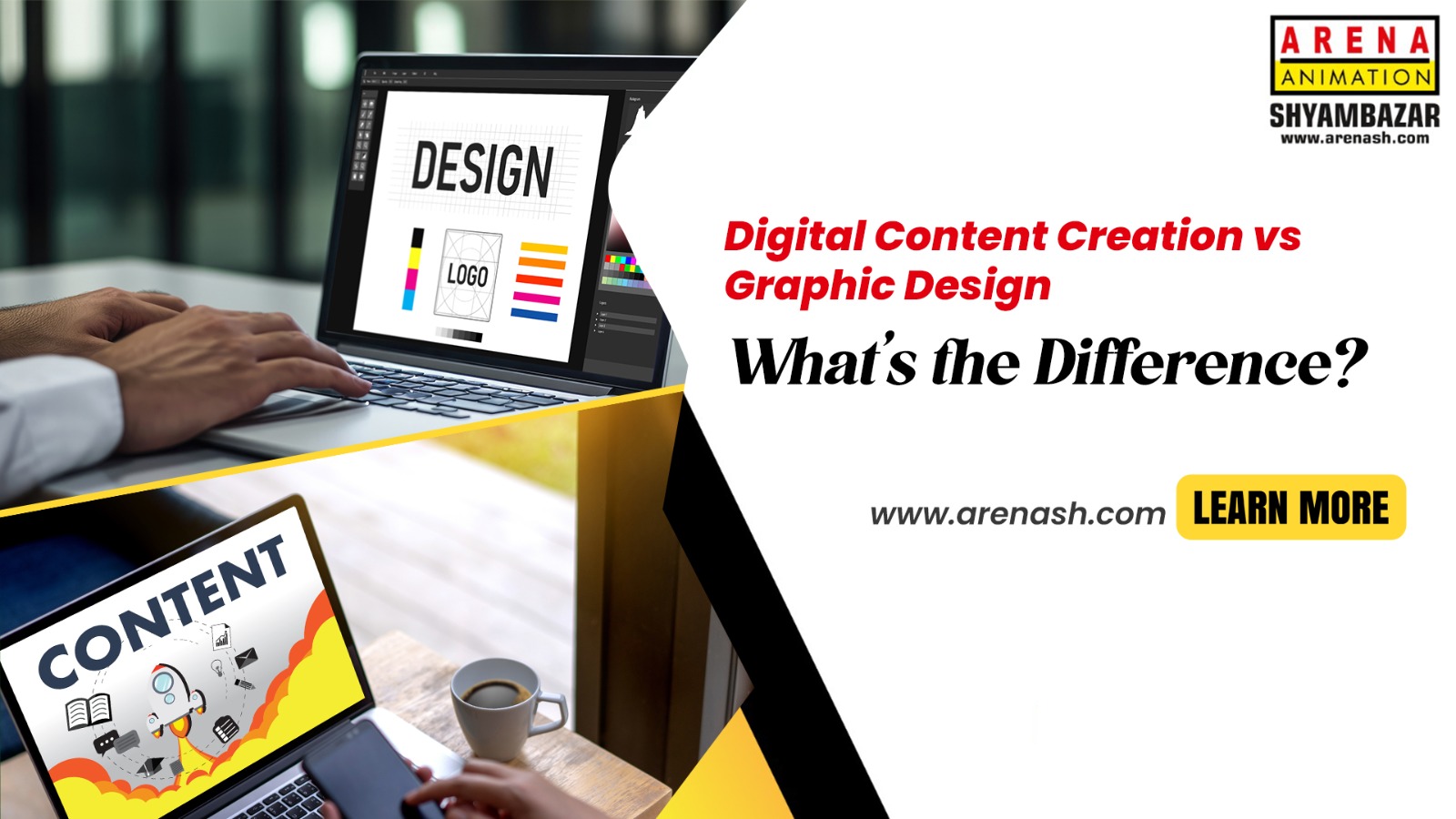
What’s the Difference between Digital Content Creation and Graphic Design?
 September 16, 2026
 By Admin


September 16, 2026
By Admin
Creative work looks different than it did a few years back. Social posts, ads, videos, animations, websites, branding- the demands keep piling up. Businesses need all of it just to stay in front of people and hold their attention.
Students weighing a creative career often land on two options: Digital Content Creation and Graphic Design. They cross paths in a few places, but calling them the same thing would be wrong. Both need a creative eye, sure, but the skills, tools, and even the job titles you’d apply for look pretty different once you get into it.
Knowing what splits them apart makes picking a direction a lot easier.
Digital Content Creation is building creative work for digital platforms. Graphics, video, animation, motion graphics, digital ads, social posts, website visuals, it can be any of these depending on the day.
A person in this line of work rarely sticks to one format. They move between whatever a project needs. And the point was never just to make something look nice. It’s about getting an idea or a story to land through digital media.
Say a brand is putting out a new product. They’ll probably want social graphics, maybe a promo video, an animated ad, a banner or two, some short clips. Somebody with a decent range of content skills could handle a good chunk of that without bringing in five different specialists.
Graphic Design is built around visual communication. A designer works with images, typography, colour, shape, and layout to say something specific.
It shows up in logos, brochures, posters, packaging, banners, ads, social creatives, whole brand identities.
Being a good designer takes more than a good eye. The design has to actually say something clearly, while holding together visually and staying true to whatever brand it belongs to.
Digital Content Creation vs Graphic Design
Here’s a simple way to look at it. Graphic Design is the narrower, more specialised craft. Digital Content Creation spreads across a much wider stretch of digital formats.
Graphic Design stays close to visual design work itself. Digital Content Creation folds that in, then keeps going into video, animation, motion graphics, storytelling, UI work, and other multimedia.
Graphic Design keeps its attention on visual work. Branding, logos, posters, packaging, ads, social posts, that’s the territory.
Digital Content Creation covers a lot more ground. A role in this space might mix graphic design, video editing, animation, motion graphics, digital ads, social content, and UI design, sometimes all in the same week.
Graphic Designers usually build static work: logos, posters, brochures, banners, illustrations, brand material.
Digital Content Creators move between static and moving content: images, video, reels, animation, motion graphics, presentations, and other multimedia pieces.
The line between the two blurs a fair bit these days, especially now that plenty of designers are expected to handle more than static work alone.
Graphic Design is built on a core set of skills. Typography. Colour theory. Layout and composition. Visual hierarchy. Branding. Illustration. Image editing. Creative communication.
Digital Content Creation starts from those same skills, then keeps building. Video editing, motion graphics, animation, digital storytelling, content planning, social media content, UI and digital design, multimedia production all come into play.
If a wider range of skills is what you’re after, Digital Content Creation gives you more territory to cover.
Tools and Software
What tools you reach for depends on the role and the project in front of you.
Graphic Designers mostly work with image editing, vector, illustration, and layout software, using them to shape brand identities, marketing pieces, packaging, and social creatives.
Digital Content Creators use those same tools, then add video editing, animation, motion graphics, and UI software into the mix.
Knowing software helps, but it isn’t the whole story. Understanding why you’re using it, what you’re trying to say, matters just as much. Creativity, design sense, storytelling, problem-solving, these carry more weight than knowing where every button sits.
Career Opportunities in Graphic Design
Graphic Design opens doors across a good few industries. Build the right skills and portfolio, and you could aim at roles like a graphic designer building visual content for brands, agencies, and campaigns, a brand designer shaping identity, logos, typography, and guidelines, a visual designer working on experiences for websites, apps, and campaigns, an illustrator producing artwork for publishing, advertising, and digital media, or a creative designer moving across different types of visual communication.
Graphic Designers land in ad agencies, design studios, media houses, marketing agencies, publishers, e-commerce companies, and plenty of corporate teams too.
Career Opportunities in Digital Content Creation
Digital Content Creation opens up an even broader set of roles. Depending on where your skills lean, you could look at working as a digital content creator building content for websites, social media, and campaigns, a motion graphics designer making animated graphics and effects for video and ads, a video editor cutting footage for promos, education, entertainment, and social content, a UI designer building interfaces for websites, apps, and digital products, a digital media designer working across graphics, video, and animation, or a multimedia designer mixing graphics, animation, and video into one experience.
Is Graphic Design Part of Digital Content Creation?
Most of the time, yes. It sits right inside the bigger picture.
Think about a social media campaign. It might need a logo, a run of posts, banners, a promo video, a handful of animated creatives, some reels. Graphic design skills handle the static side of that. Digital content creation skills carry it further into video, animation, and multimedia.
Which is exactly why a solid grounding in Graphic Design pays off down the line, if a broader career in digital content is where things are headed.
Why Does Graphic Design Matter for Digital Content Creation?
Solid design basics lift almost everything built on top of them.
Understanding colour, type, spacing, hierarchy, and branding helps creators make things that look put-together and actually communicate. A video can be cut beautifully and still fall flat if the typography’s off or the visuals feel inconsistent. A campaign holds together better once the graphics, video, colours, and type all follow one identity instead of five.
So Graphic Design ends up as a strong base to build from, no matter which direction things go afterward.
Which Career Should You Choose?
It really comes down to what you enjoy and where you’d rather end up.
Logos, branding, typography, illustration, posters, layout, if that’s what pulls you in, Graphic Design is probably the right fit.
Graphics, video, animation, motion graphics, storytelling, social content, UI, multimedia, if that’s more your speed, Digital Content Creation gives you more room to explore.
And if both sound appealing, nothing’s stopping you from picking up graphic design fundamentals alongside other digital content skills. It gives a clearer sense of how these fields actually work together once you’re on the job.
Career Scope in Kolkata
Kolkata’s digital scene keeps expanding. Ad agencies, digital marketing firms, media houses, entertainment businesses, e-commerce companies, startups, and corporates are all part of that mix now.
As more businesses lean into social media, websites, online ads, and video marketing, the demand for skilled creative people keeps climbing right along with it.
Which is good news for students building practical skills in Graphic Design, Digital Content Creation, Motion Graphics, Video Editing, UI Design, and areas close to those.
Institutes like Arena Animation Shyambazar run training built around animation, visual design, digital content, and other creative skills, meant to help students get a footing in the field.
What to Look For in a Creative Course
Picking a course takes more than reading its title. It’s worth digging into what you’ll actually walk away knowing.
A solid course mixes design fundamentals, software training, real projects, creative thinking, and portfolio work. Practical experience counts for a lot here, since employers usually care more about what you can make than which software you’ve clicked through.
A strong portfolio is what ends up doing the talking, showing off your creativity, skills, approach, and ability to handle real work.
Conclusion
Digital Content Creation and Graphic Design sit close to each other, but they’re not the same field, not really.
Graphic Design centres on visual communication: typography, colour, images, illustration, layout, branding. Digital Content Creation covers more ground, folding in graphics alongside video, animation, motion graphics, UI, and other digital media.
Enjoy building visual designs and brand identities? Graphic Design could suit you well. Would rather move across formats, working with graphics, video, animation, and multimedia? Digital Content Creation might be the better path.
In the end, it comes down to what interests you, how you think creatively, and the kind of work you actually want to be doing day to day. Build strong fundamentals, get hands-on experience, put together a solid portfolio. That’s what carries things forward toward a good creative career.
Reach out to us using the form below!
September 16, 2026 | By Admin

September 10, 2026 | By Admin
September 4, 2026 | By Admin
August 27, 2026 | By Admin
August 19, 2026 | By Admin
August 17, 2026 | By Admin
August 5, 2026 | By Admin
July 21, 2026 | By Admin
July 14, 2026 | By Admin
July 9, 2026 | By Admin