Want to jump into graphic design? Let’s be real, stepping into a brand new creative field can feel a bit like trying to read a foreign language. You see amazing artwork, sleek apps, and catchy ads everywhere, but figuring out how to actually make them from scratch is another story entirely.
Don’t stress too much about it. It takes time, some effort, and the right guidance to get good at this. We have put together a straightforward guide to help you find your footing and understand exactly what it takes to become a graphic designer.
What Exactly is Graphic Design?
At its core, graphic design is just visual problem-solving. It is the process of taking ideas and turning them into messages that people can instantly understand. You do this by mixing text, images, and various visual elements.
Think about it: pretty much everything around you was designed by someone. The screen you are staring at right now, the packaging of your favorite snack, and the billboards you pass by on your commute all rely on graphic design to grab your attention.
Why Are Graphic Design Skills So Important Today?
We are currently living in an era dominated by visual media. People are consuming content at lightning speed, and attention spans are shorter than ever. You no longer have the luxury of asking an audience to read a wall of text to understand what a business does. You have to show them, and you have to do it in seconds. This heavy reliance on visual communication has catapulted graphic design to the very top of the list when it comes to essential modern career skills.
Every single organization on the planet—from a local bakery to a massive multinational tech conglomerate—needs a graphic designer. Here is a deeper look into why these skills hold so much weight:
- Impactful Communication A well-crafted design cuts through the noise. It has the power to take a complicated, dense piece of information and make it digestible. Think of infographics. They take dry, boring statistics and turn them into colorful, engaging visual stories that people actually want to read and share.
- Driving First Impressions and Brand Identity You have heard the saying, “Don’t judge a book by its cover,” but in the commercial world, that is exactly what consumers do. A company’s logo, color palette, and visual style are its digital handshake. Good design builds instant trust and credibility, while poor design can make a legitimate business look amateurish and unreliable.
- Improving User Experience (UX) Design is not just about looking good; it is about functioning perfectly. When you visit a website and intuitively know where to click to find the contact information or make a purchase, that is the result of good design. Designers structure information logically, ensuring that the end-user has a seamless, frustration-free experience.
- Fostering Innovation and Standing Out In saturated markets where dozens of companies are selling the exact same product, the only way to stand out is through creative presentation. Graphic designers are the innovators who find fresh, unexpected ways to present familiar concepts, helping brands carve out their own unique identities in a sea of competitors.
The Seven Pillars of Graphic Design
Before you start stressing about learning complicated software, you need to understand the basic ingredients of a good design. If you master these elements, you are already halfway there.
- Lines: Think of lines as the skeleton of your work. They connect points, guide the viewer’s eyes, and can be thick, wavy, or totally erratic to show different moods.
- Color: This is a massive one. Colors literally make us feel things. Learning color theory helps you figure out why a hospital uses calming blues while a fast-food joint uses urgent reds and yellows.
- Shapes: Everything boils down to shapes. You have geometric ones (like squares and perfect circles that require tools to make) and organic ones (freehand shapes you naturally see in the real world).
- Size and Scale: Want someone to look at a specific element first? Just make it bigger. It is the easiest way to establish what is most important on your canvas.
- Texture: Since most of your work will live on a flat screen or paper, creating an illusion of how something feels (like rough cardboard or smooth glass) adds a ton of depth and realism.
- Space: Also known as white space or negative space. Please do not fill every single inch of your screen. Giving your design room to breathe gives the viewer’s eyes a break and makes your main subject pop.
- Typography: The art of picking and arranging text. Choosing the right font is crucial because a spooky Halloween font obviously will not work for a serious corporate presentation.
Top Graphic Design Tools You Need to Know
Technology is constantly evolving, and today’s designers are blessed with incredibly powerful software to bring their visions to life. While you do not need to learn all of them immediately, it is important to know the industry standards and what each tool is best used for.
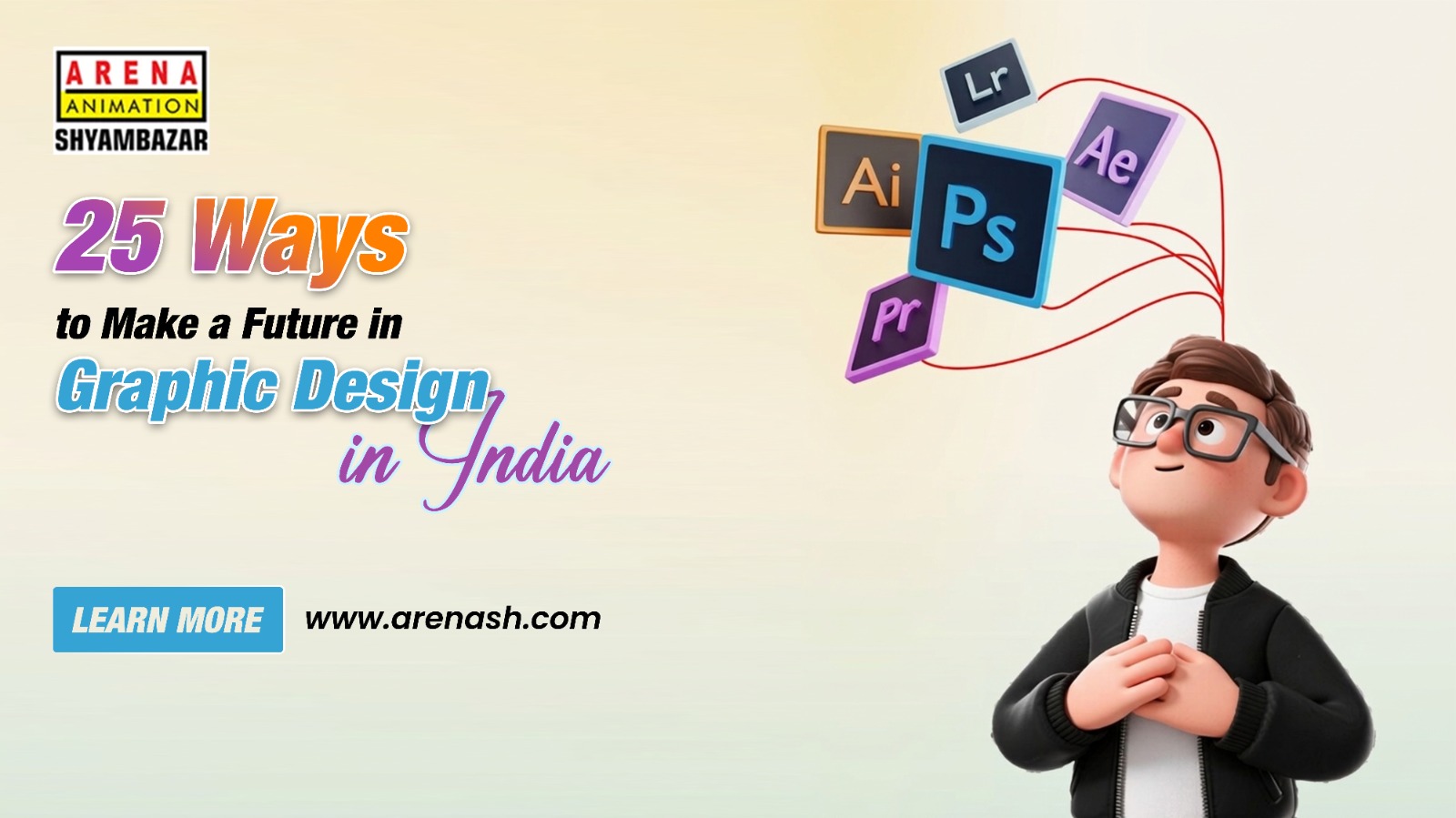
- Adobe Photoshop This is the undisputed heavyweight champion of the design world. Photoshop is a raster-based software, meaning it works with pixels. It is the ultimate tool for photo manipulation, advanced color correction, digital painting, and creating complex, layered compositions. If you are working with photographs or highly detailed digital art, Photoshop is your home.
- Adobe Illustrator While Photoshop is pixel-based, Illustrator is vector-based. This means it uses mathematical equations to create shapes. The massive advantage here is that vector graphics can be scaled up to the size of a skyscraper or shrunk down to the size of a postage stamp without ever losing quality or becoming blurry. Illustrator is the absolute industry standard for designing logos, icons, typography, and brand mascots.
- Adobe InDesign If you are dealing with multi-page layouts, InDesign is the tool of choice. It is specifically built for desktop publishing. Whether you are formatting a 300-page book, laying out a monthly magazine, designing an annual corporate report, or creating a tri-fold brochure, InDesign handles massive amounts of text and imagery with incredible precision.
- Figma In the realm of digital product design, Figma has taken the world by storm. It is a cloud-based design tool focused entirely on User Interface (UI) and User Experience (UX) design. If you want to design how a website looks, or prototype how a mobile app functions before it goes to the developers, Figma is where the modern industry does its work.
- Corel Draw Often seen as an alternative to Illustrator, Corel Draw is another powerful vector graphics editor. It remains highly popular in specific sectors of the design industry, particularly in print shops, signage creation, and the apparel industry.
- Procreate This app revolutionized digital art for iPad users. Procreate is a raster graphics editor designed specifically for digital painting and illustration. Its incredibly natural brush engine and intuitive interface make it a favorite for freelance illustrators, character designers, and lettering artists who prefer the feel of drawing with a stylus on a screen.
- Canva Canva democratized design. It is a web-based, drag-and-drop tool that is incredibly user-friendly. While it lacks the deep, granular control of Adobe products, it is absolutely perfect for beginners, social media managers, and small business owners who need to generate clean, professional-looking graphics, presentations, and social media posts quickly.
Why Start Your Journey in Kolkata?
If you are looking to learn, being in Kolkata is actually a massive advantage. You are sitting right in the middle of a cultural goldmine. The city’s rich artistic history and diverse vibe naturally inspire creativity. On top of that, the cost of living here makes pursuing a high-quality creative education way more affordable and accessible compared to other major metro cities in India.
Learn Graphic Design at Arena Animation Shyambazar
However, when you look at legacy, consistency, and industry trust, Arena Animation stands apart from the crowd. With over 27 years of experience in shaping creative careers, Arena is a massive pillar in the Indian design education space. While they have multiple centers across the city (including Behala, Gariahat, and others), the Arena Animation Shyambazar center is particularly notable for its deeply experienced faculty and vibrant student community.
Here is why choosing a reputable institute like Arena Shyambazar can be the catalyst for your career:
- Industry-Relevant Curriculum: The design world changes fast. The software updates, the trends shift, and the technical requirements evolve. Arena constantly updates its curriculum so you are never learning outdated techniques. You learn exactly what creative directors at top agencies are looking for today.
- Expert Mentorship: There is a massive difference between watching a video tutorial and having a professional look over your shoulder, critique your work, and tell you exactly how to improve your composition. The faculty members at Arena are seasoned experts who bring real-world studio experience directly into the classroom.
- High-End Infrastructure: Graphic design requires serious computing power. Arena provides well-equipped computer labs loaded with the latest, fully licensed software and specialized digital equipment, ensuring that you are working on the same technology used in professional studios.
- 100% Placement Assistance: Learning the skill is only half the battle; getting your foot in the door is the other half. Arena Shyambazar doesn’t just hand you a certificate and wish you luck. They actively prepare you for the job market, helping you build a knockout portfolio, conducting mock interviews, and providing dedicated placement assistance to connect you with top companies.
- Affordability and Accessibility: Situated in a highly connected part of the city, the Shyambazar center is easily accessible by all forms of public transport. Furthermore, they structure their fees to be among the most competitive and affordable in Kolkata, ensuring that world-class design education is within reach.
Final Thoughts on Your Creative Future
Embarking on a career in graphic design is choosing a path of lifelong learning and endless creativity. It is a field where your imagination is your greatest asset, and your ability to communicate visually can genuinely impact how people experience the world. You will face challenges, you will have moments of creative block, and you will spend hours tweaking a single curve in a logo until it looks exactly right. But the moment you see your first design published, printed, or launched online, every single second of effort will feel completely worth it.
You do not need to be born with some magical artistic talent to succeed. What you need is an understanding of the fundamentals, a willingness to practice relentlessly, and the right guidance to help channel your ideas. If you are ready to stop just looking at the visual world and start actually creating it, taking that first structured step with a trusted institution like Arena Animation Shyambazar will set the foundation for a brilliant, dynamic career.
 April 9, 2026
 By Admin








 +91 9836221155